Lunar Thin Sections
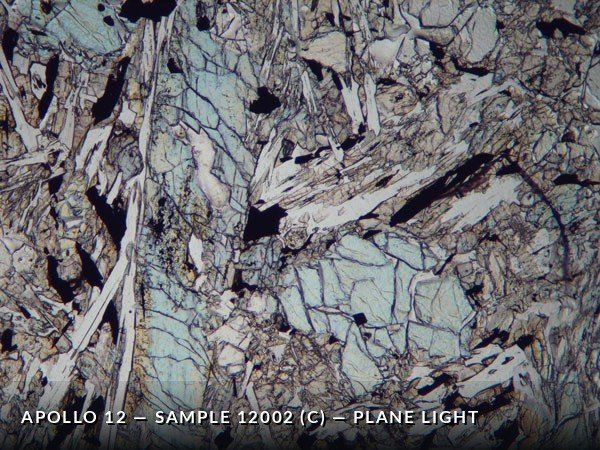
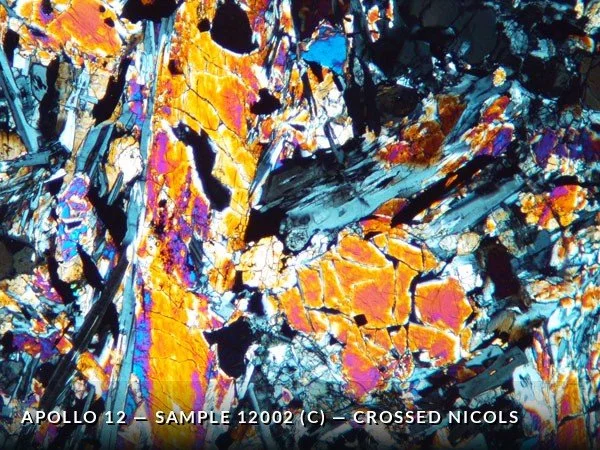
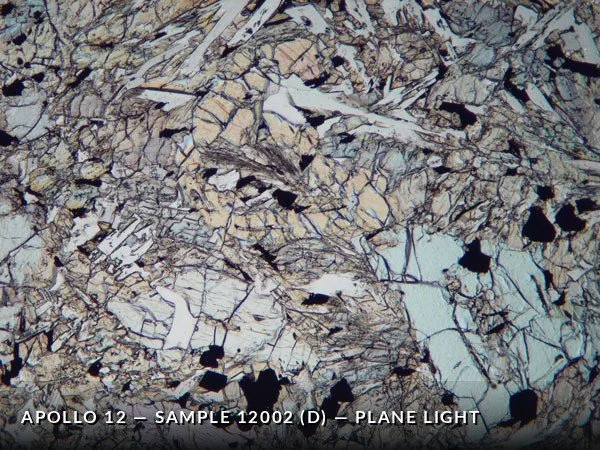
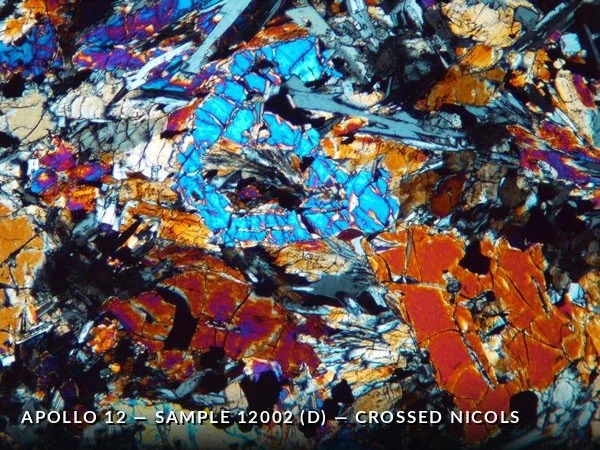
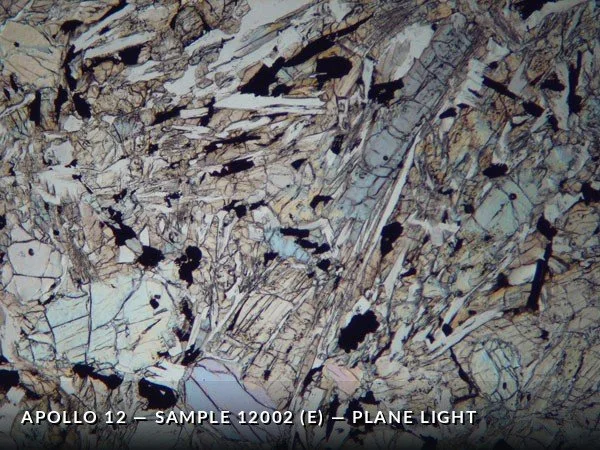
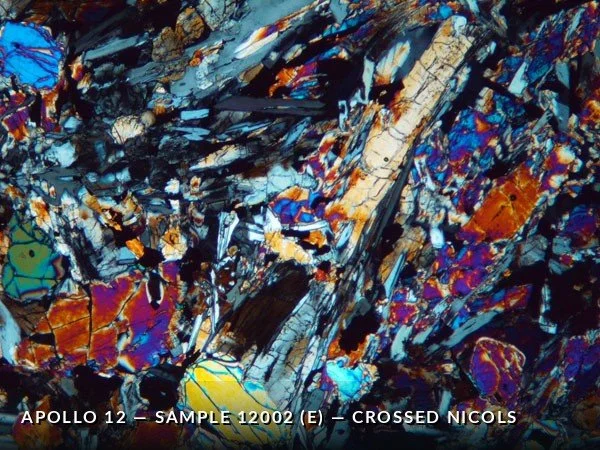
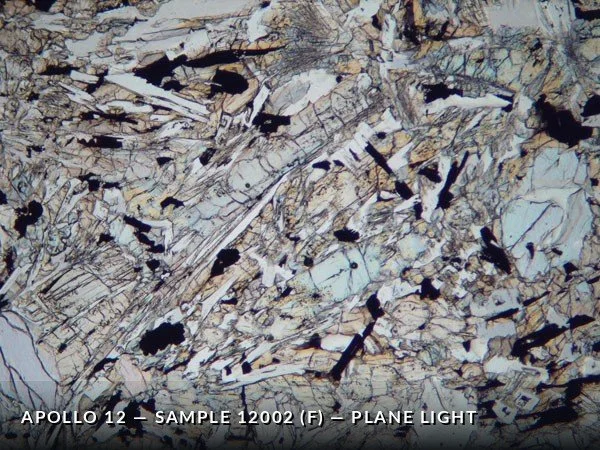
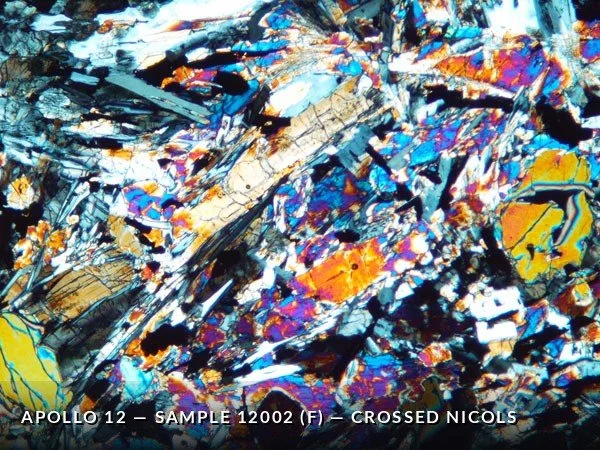
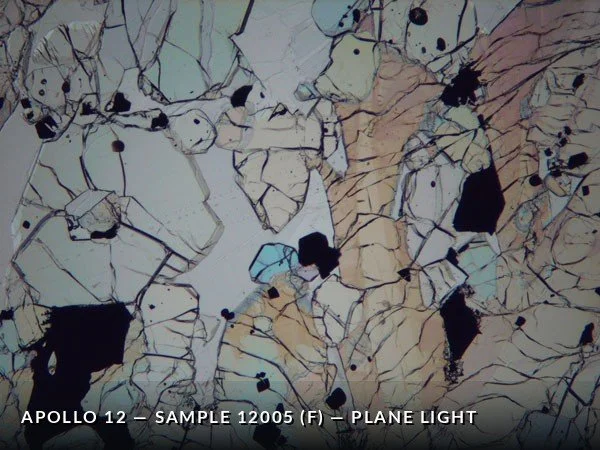
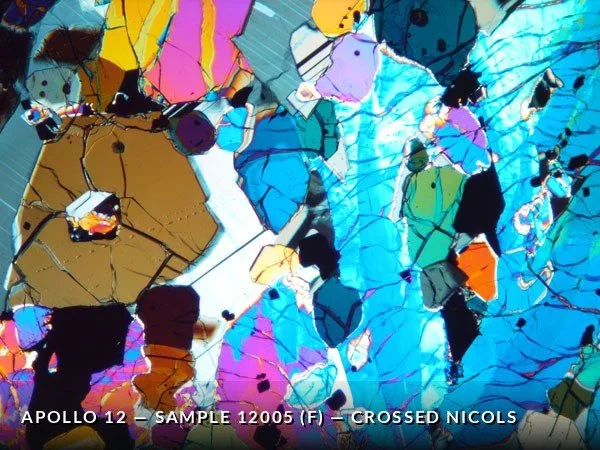
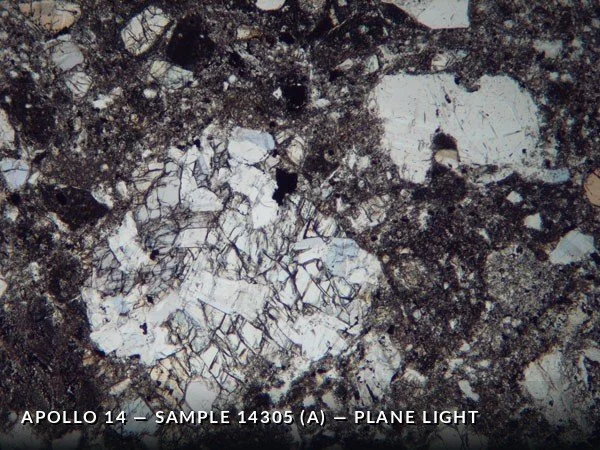
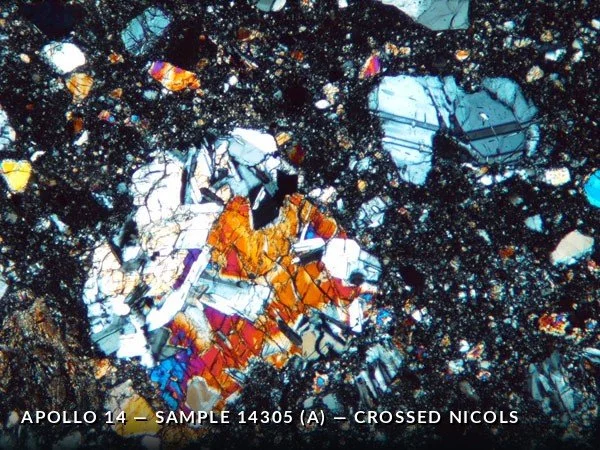
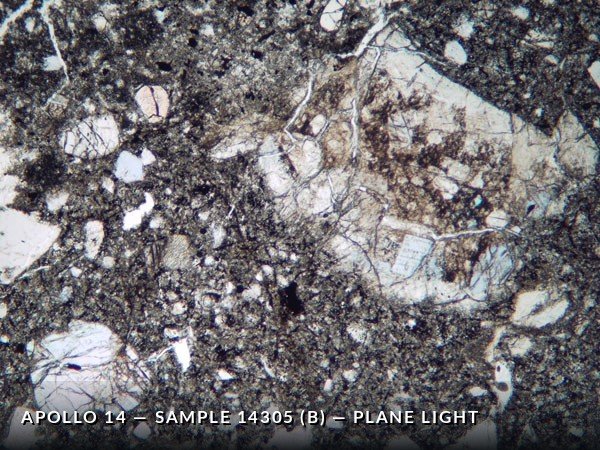
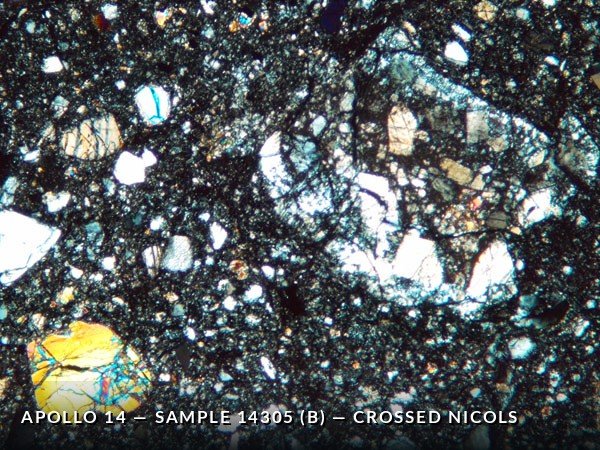
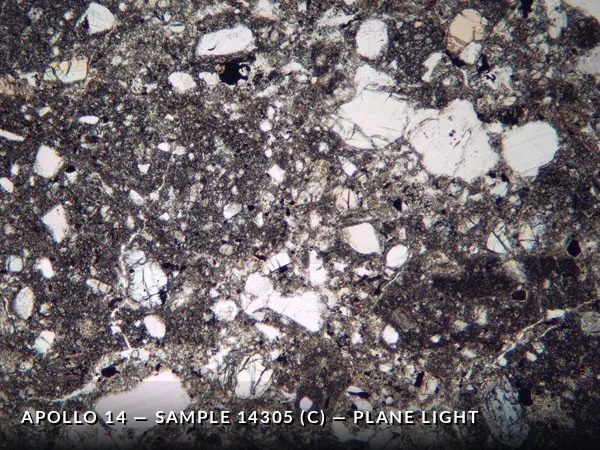
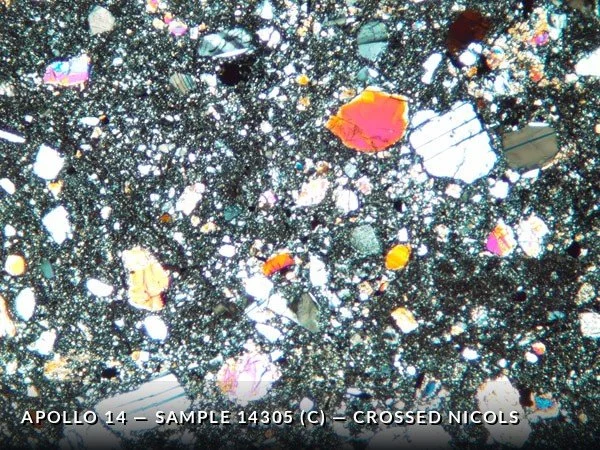
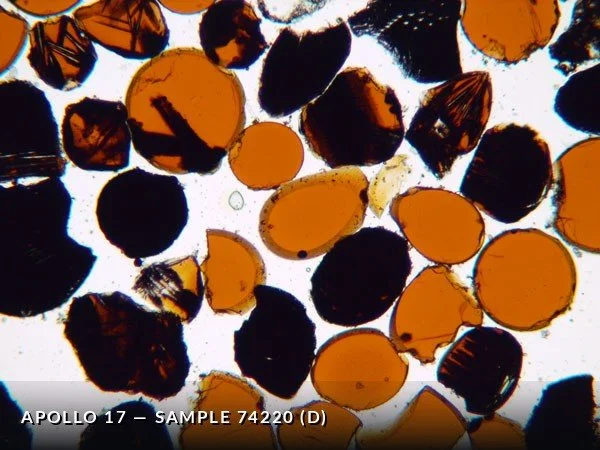
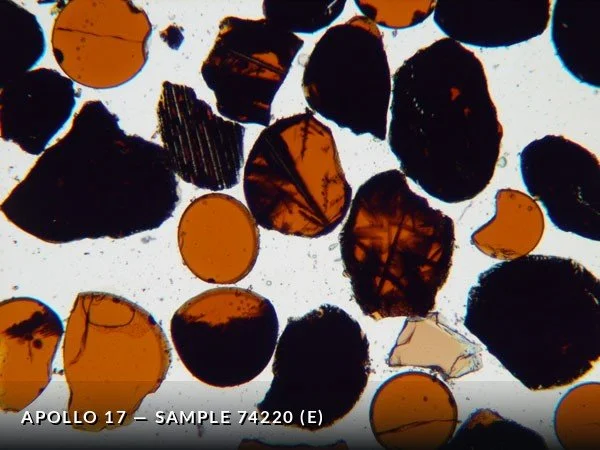
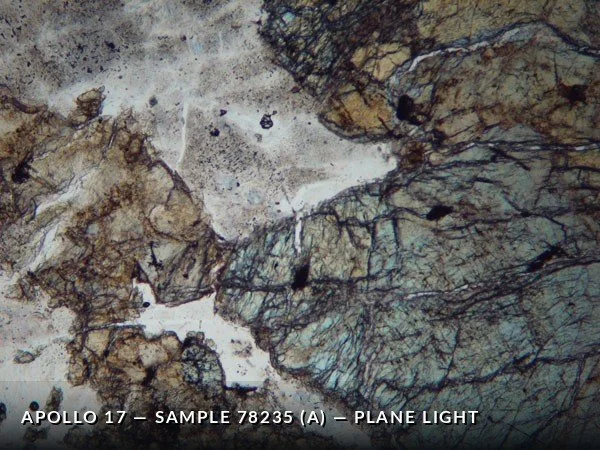
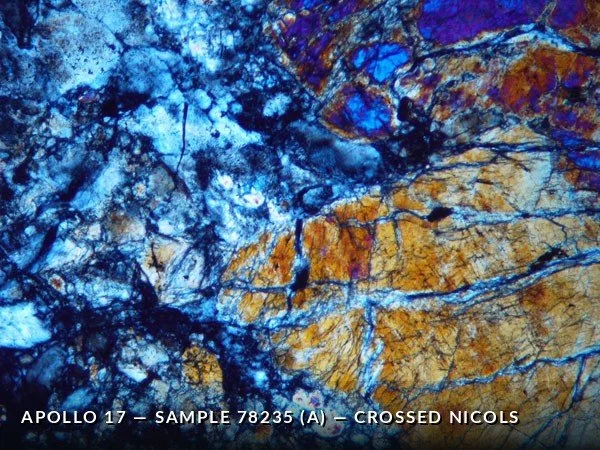
These are photomicrographs of rock returned from the Moon.
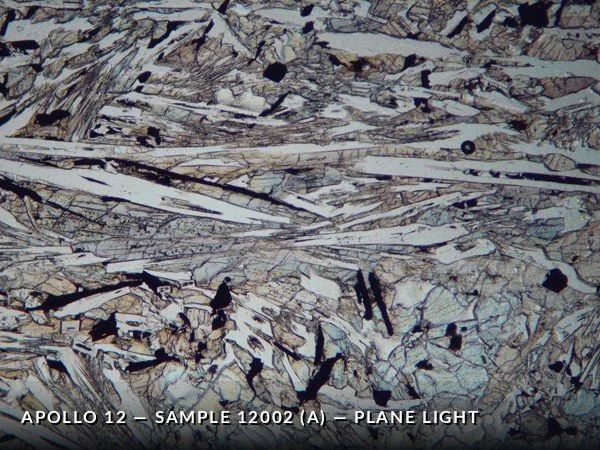
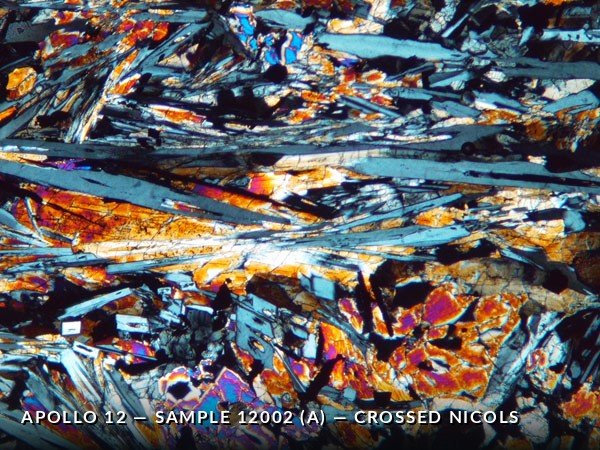
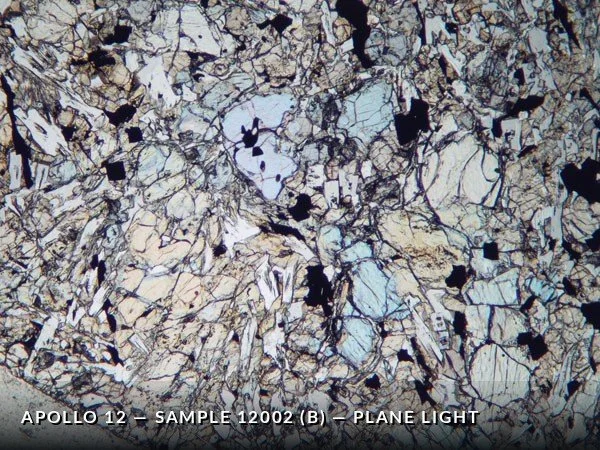
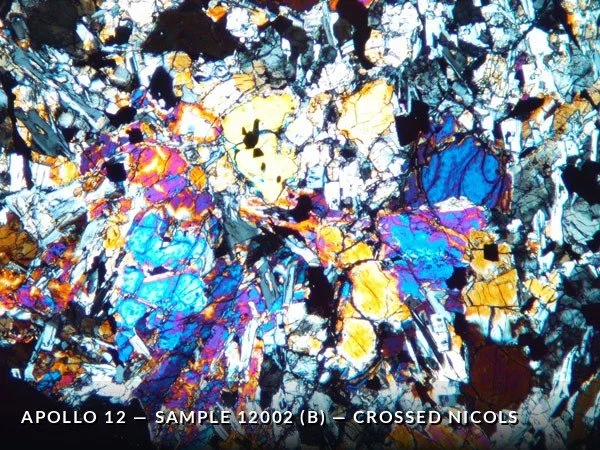
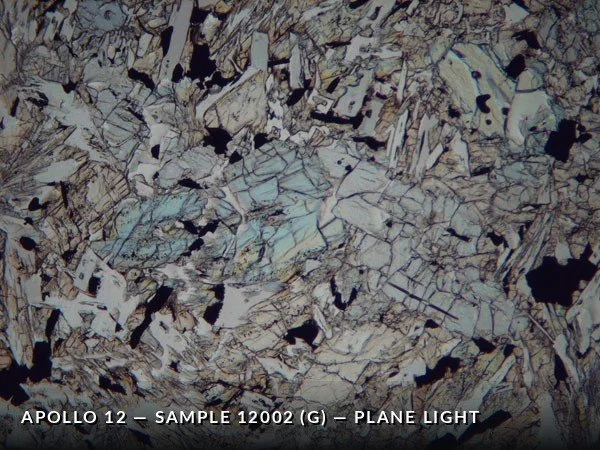
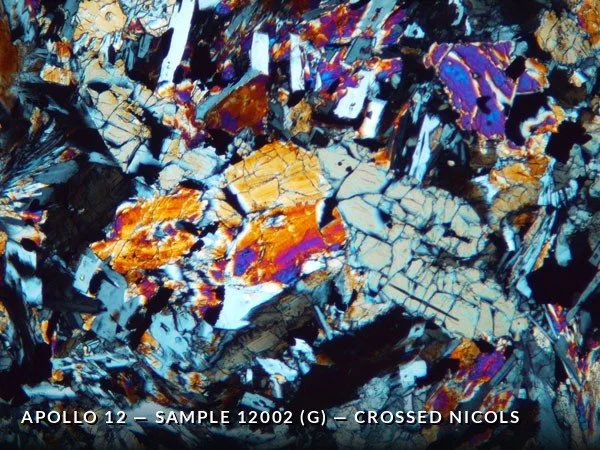
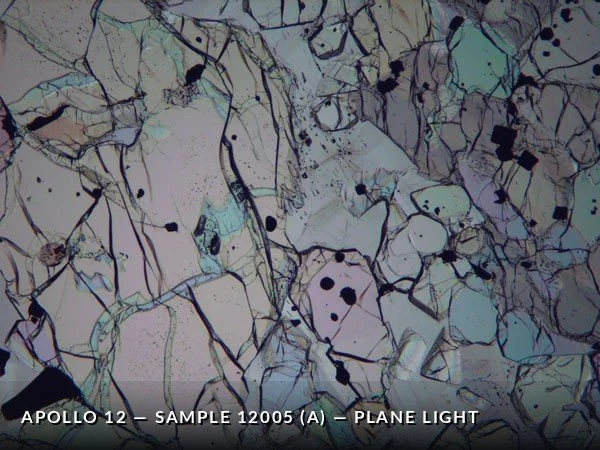
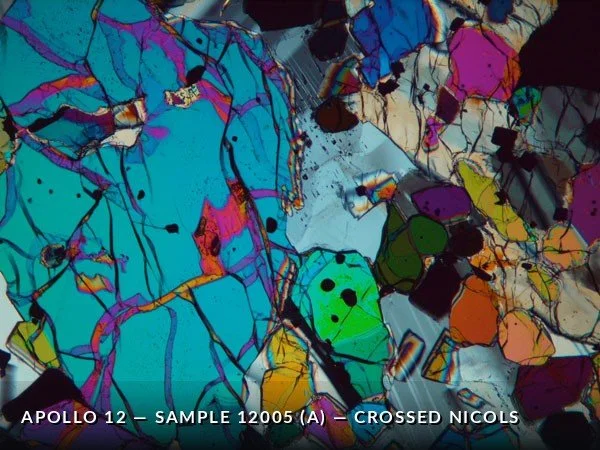
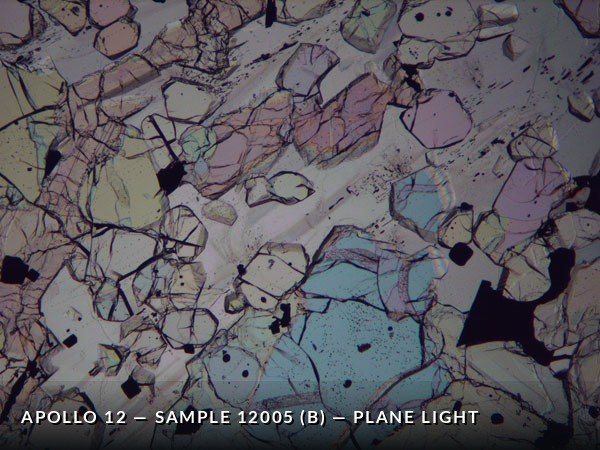
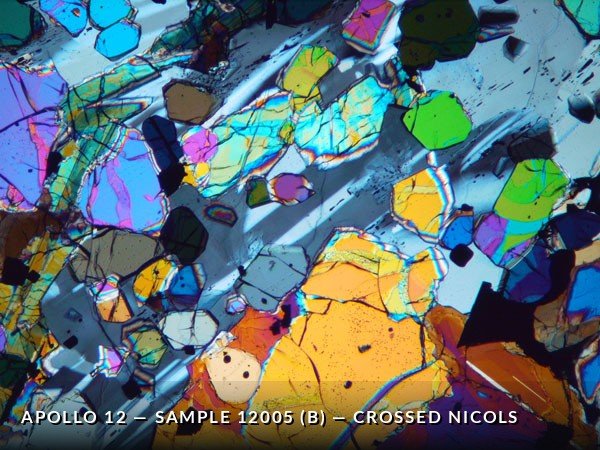
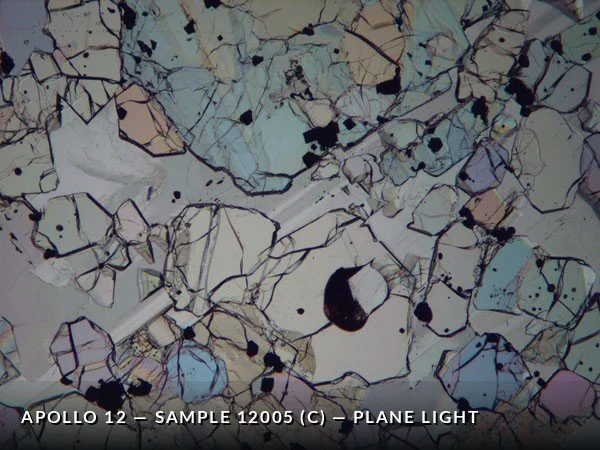
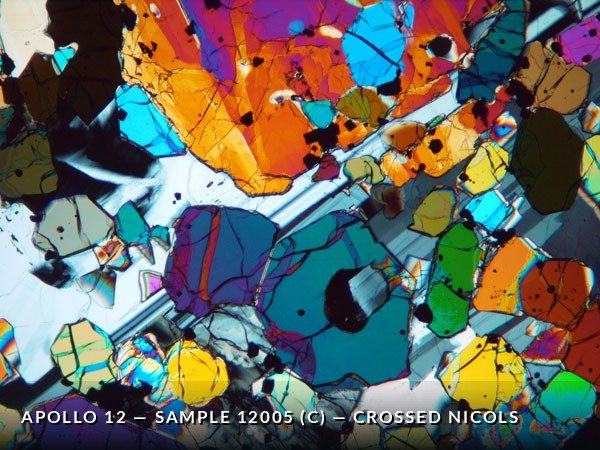
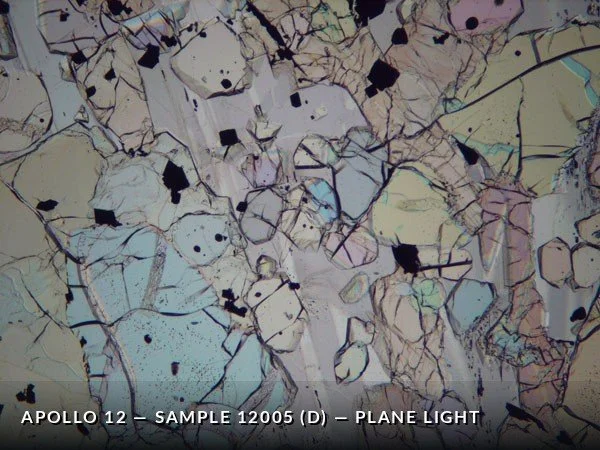
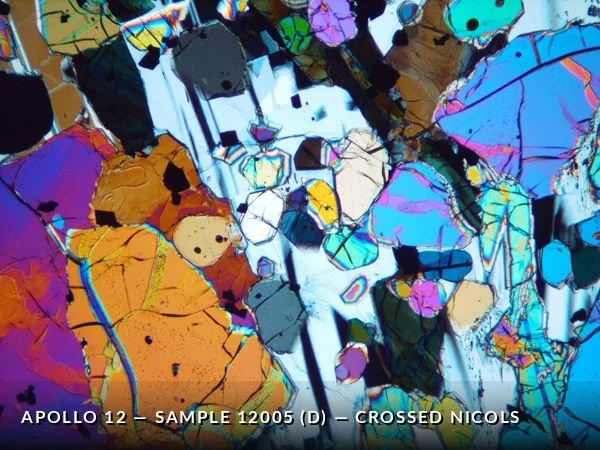
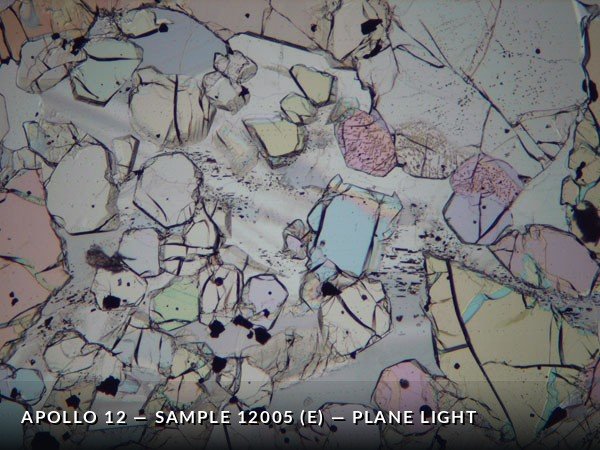
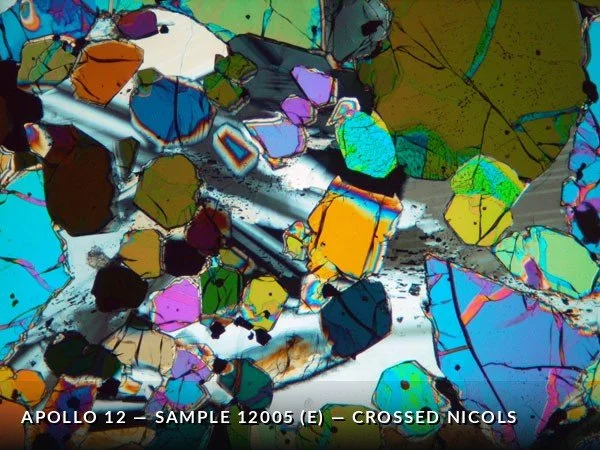
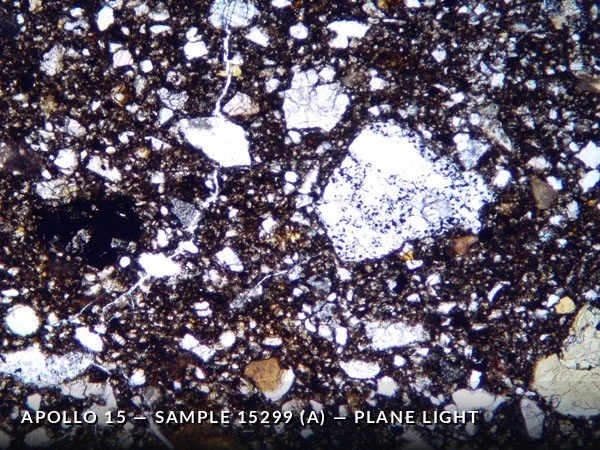
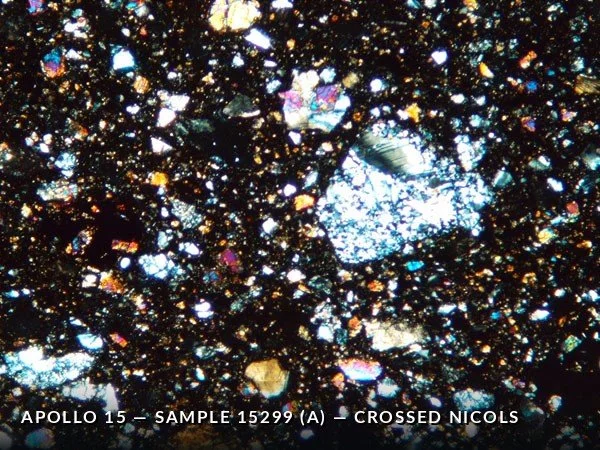
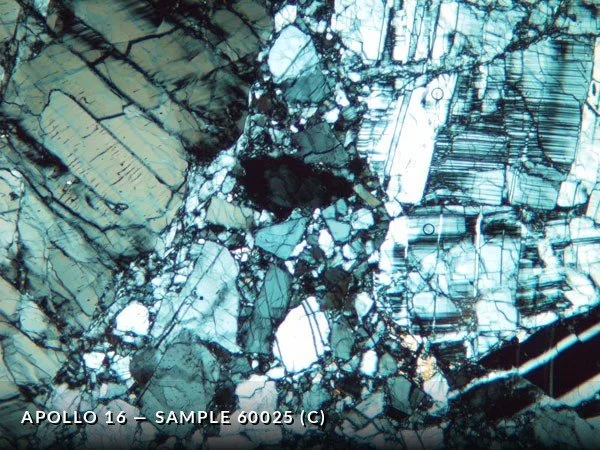
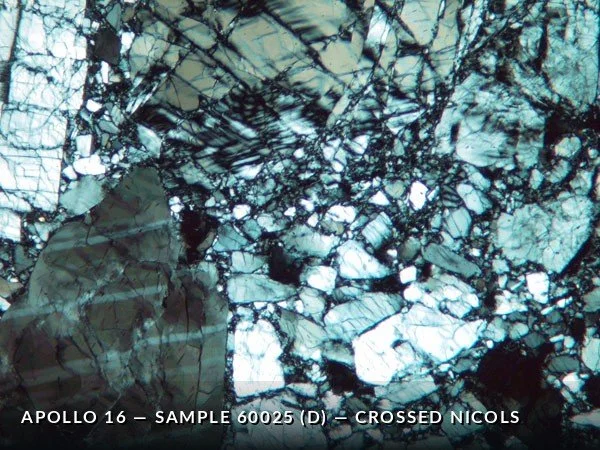
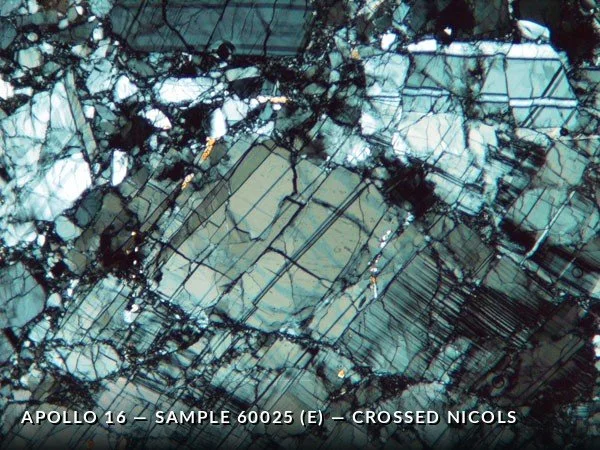
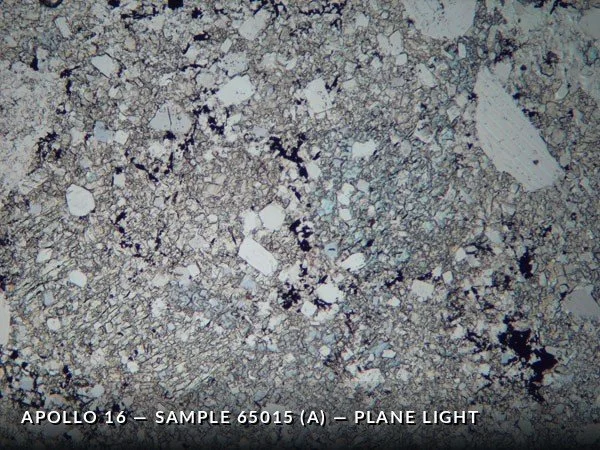
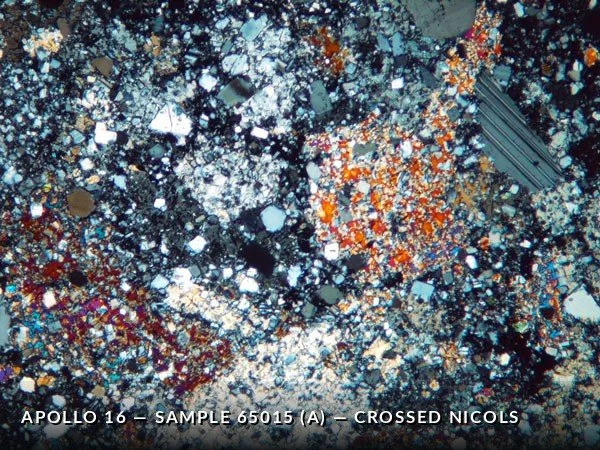
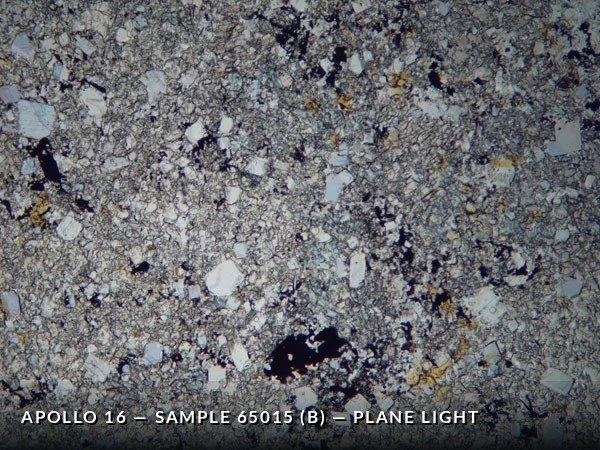
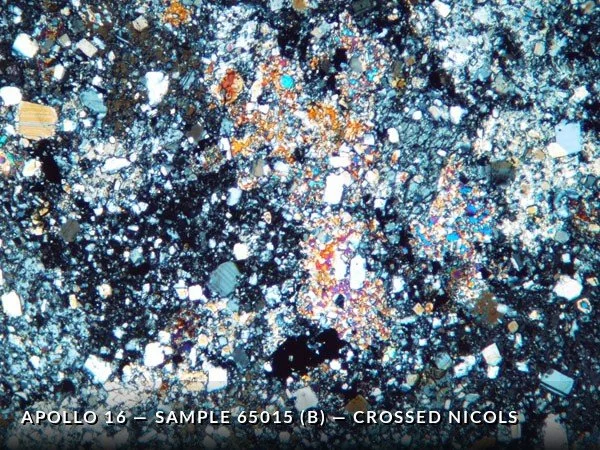
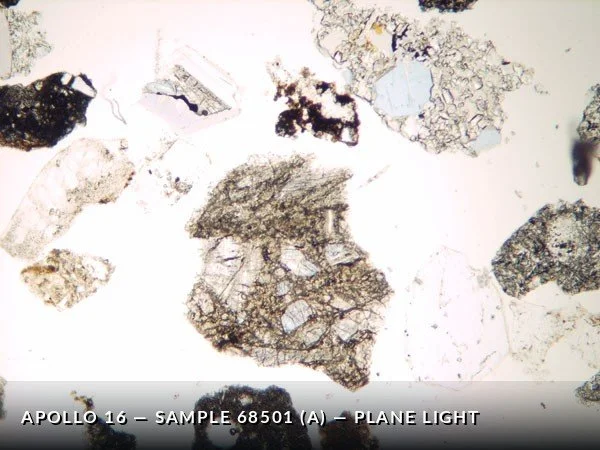
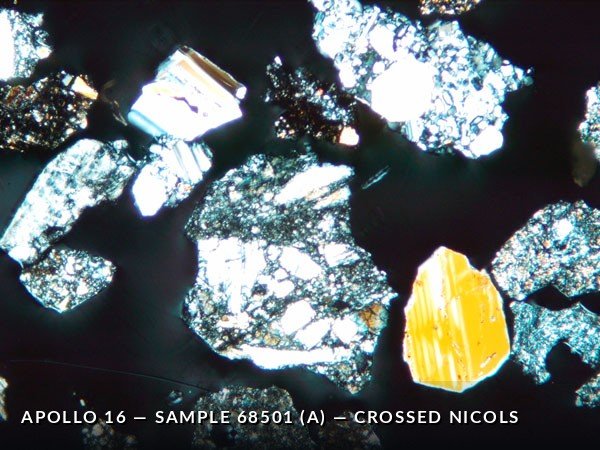
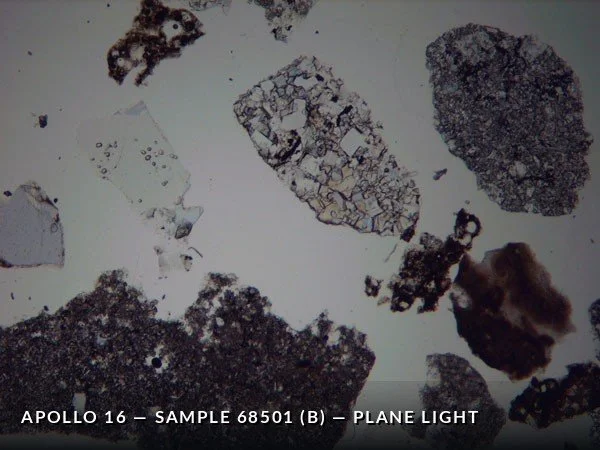
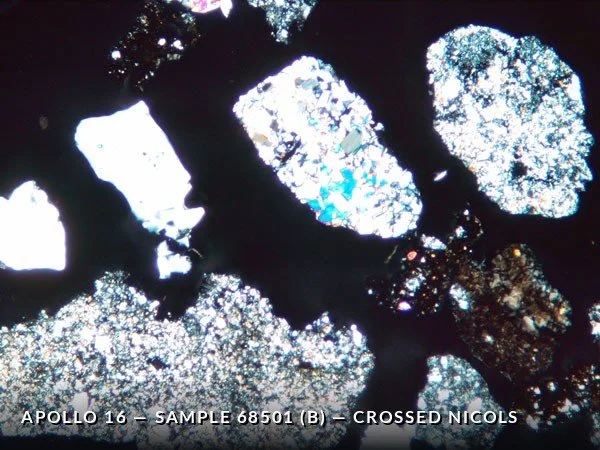
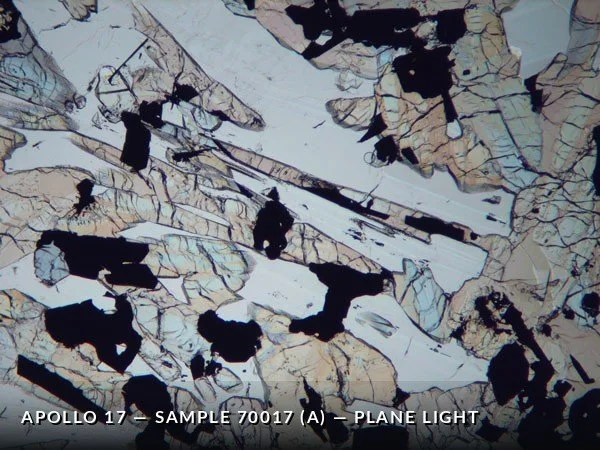
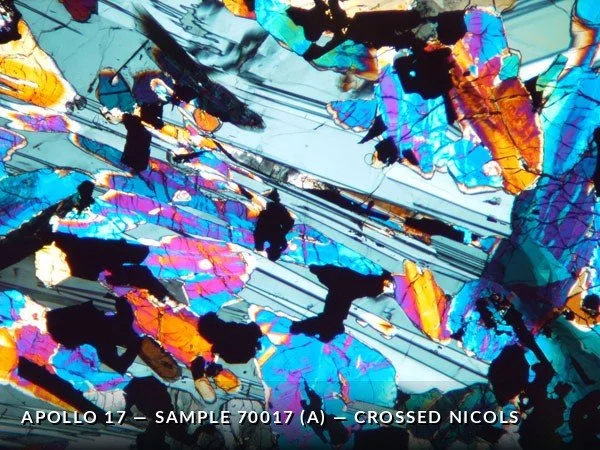
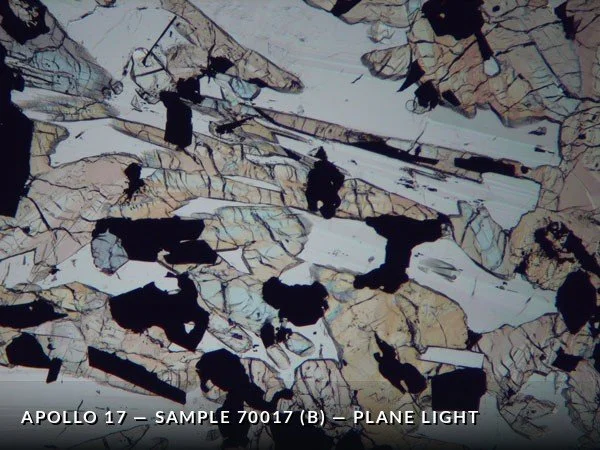
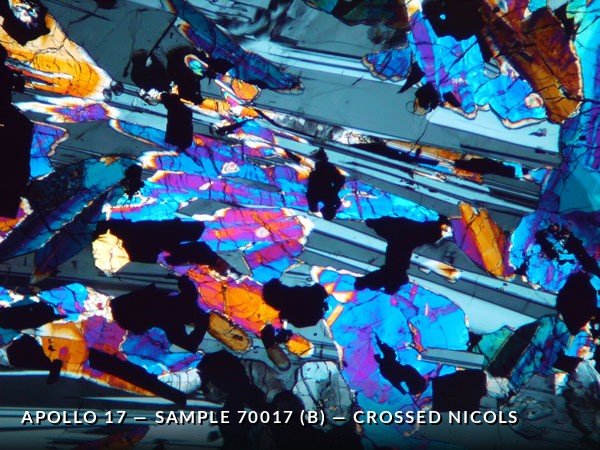
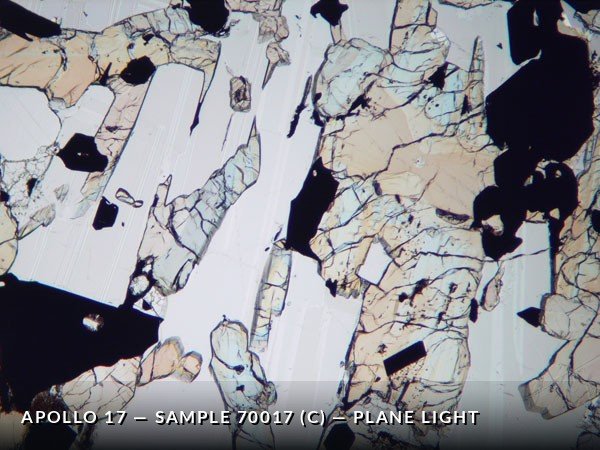
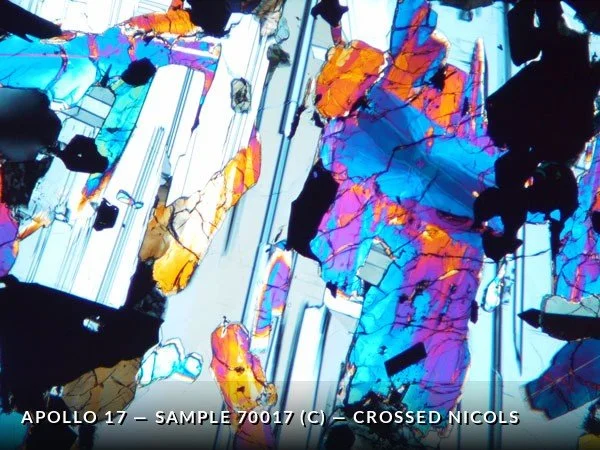
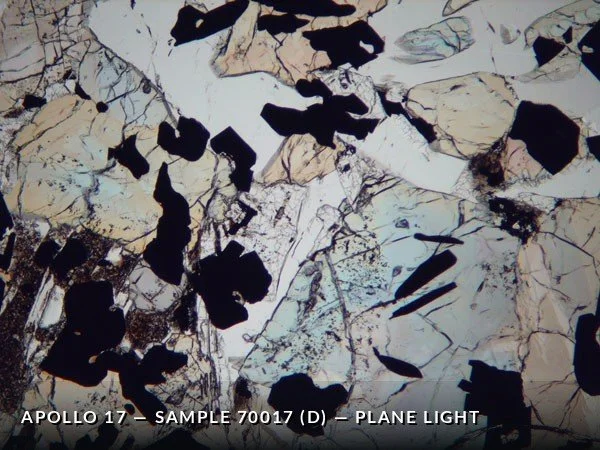
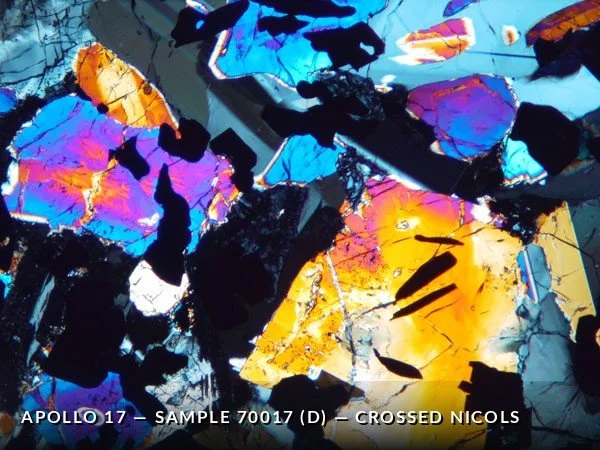
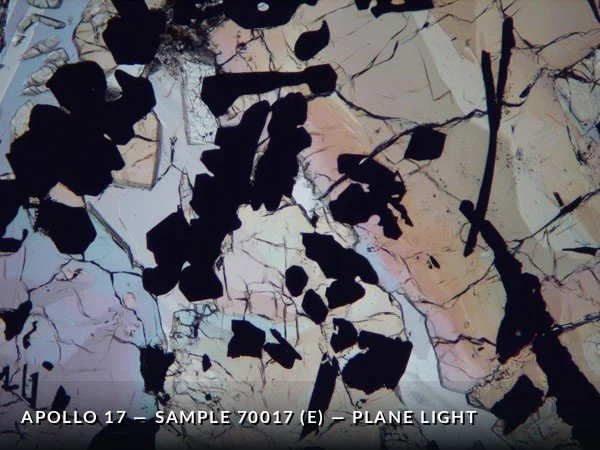
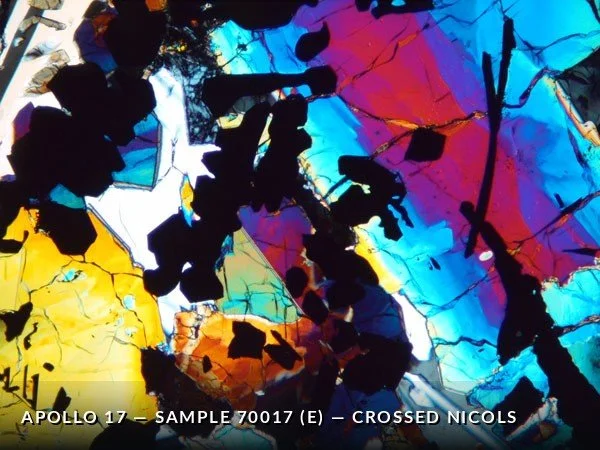
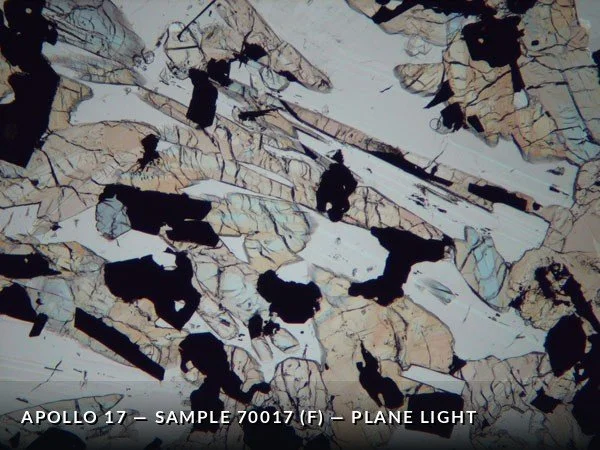
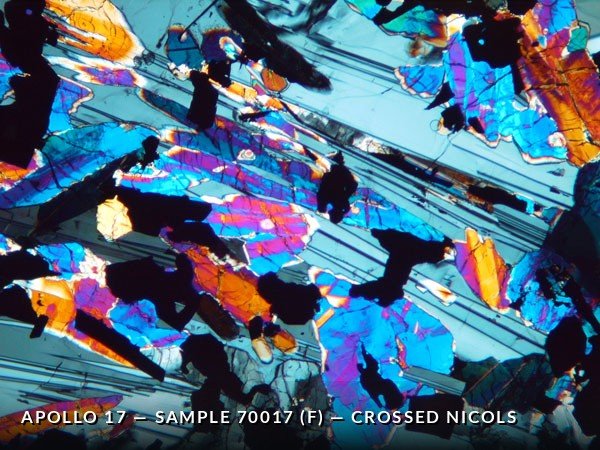
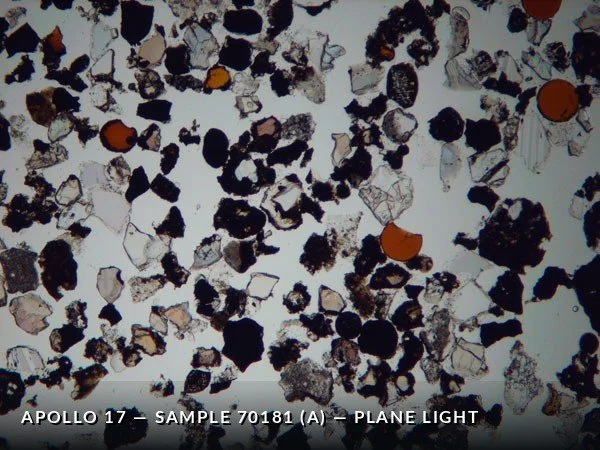
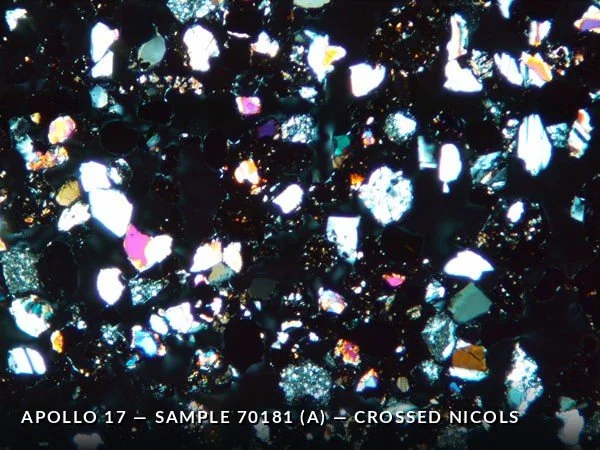
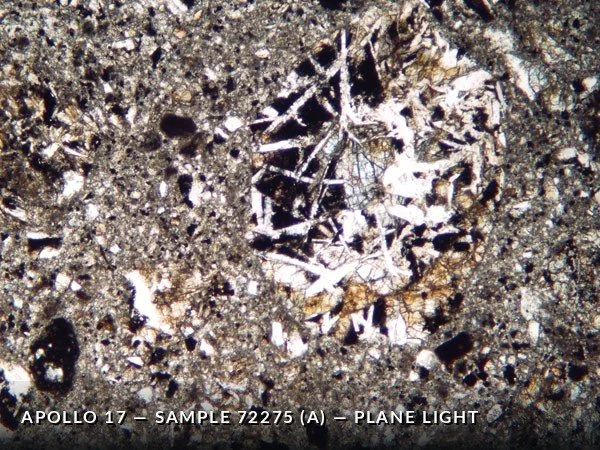
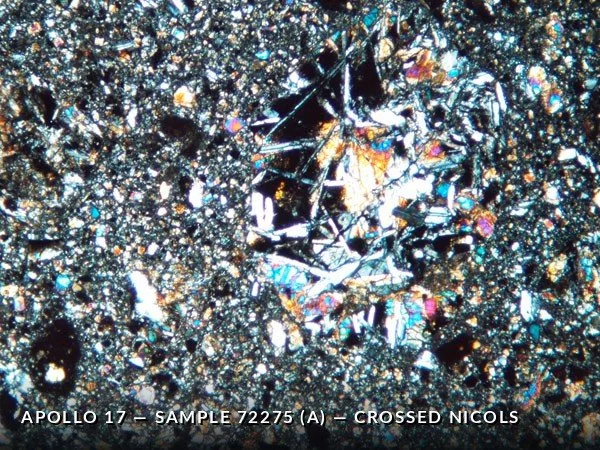
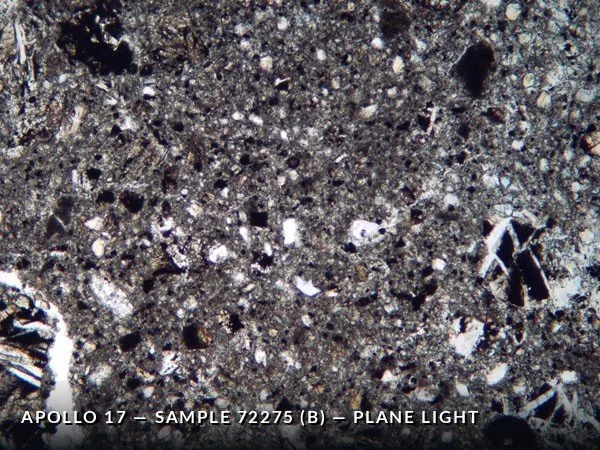
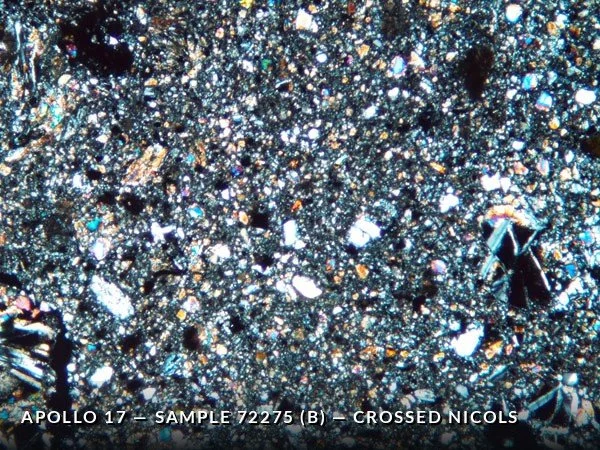
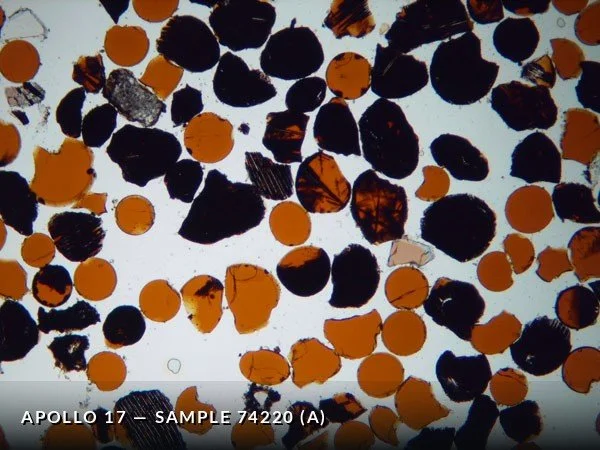
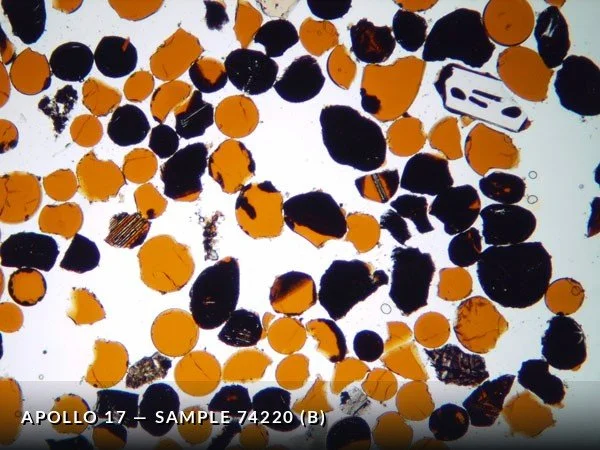
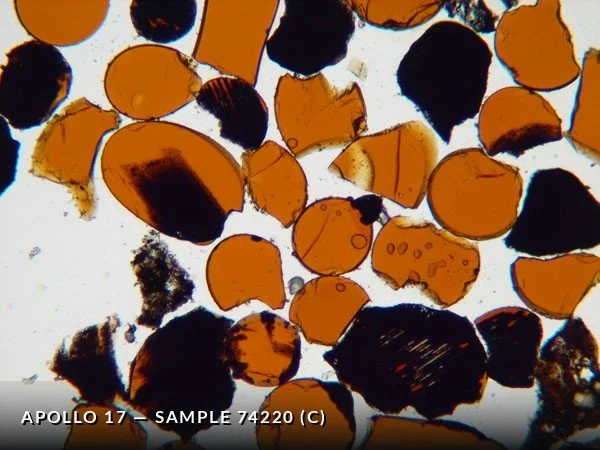
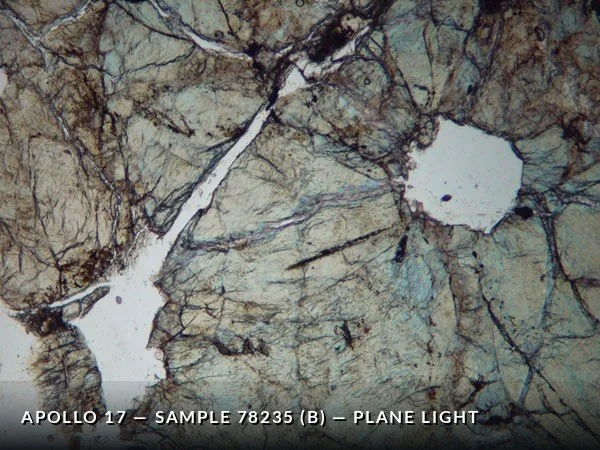
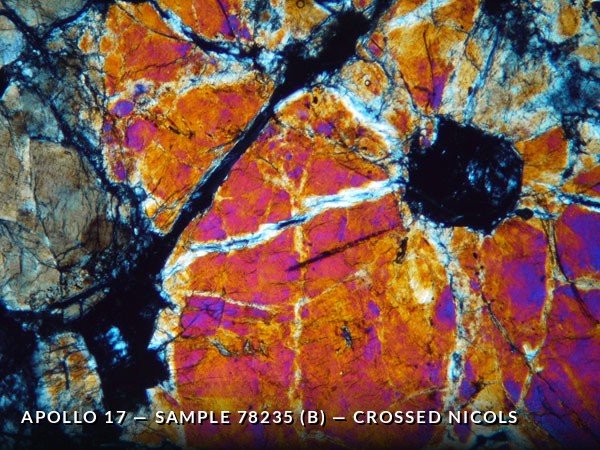
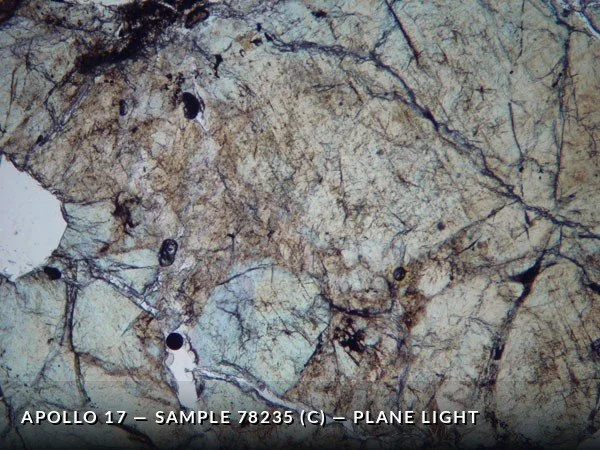
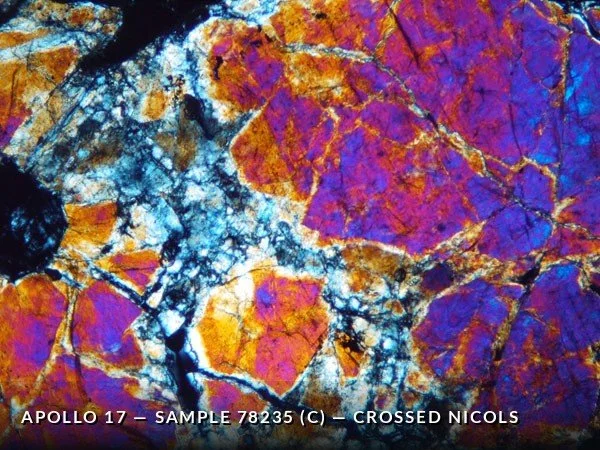
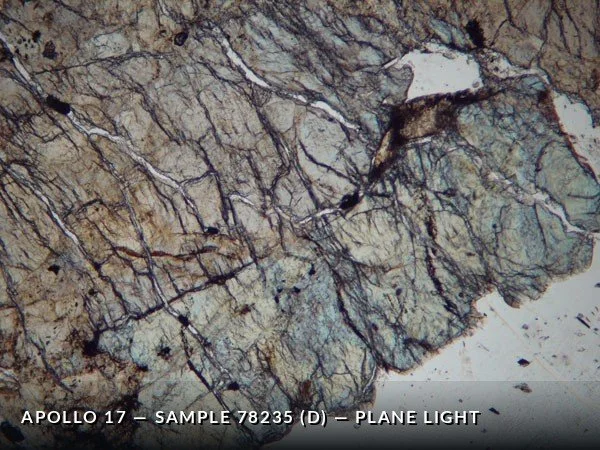
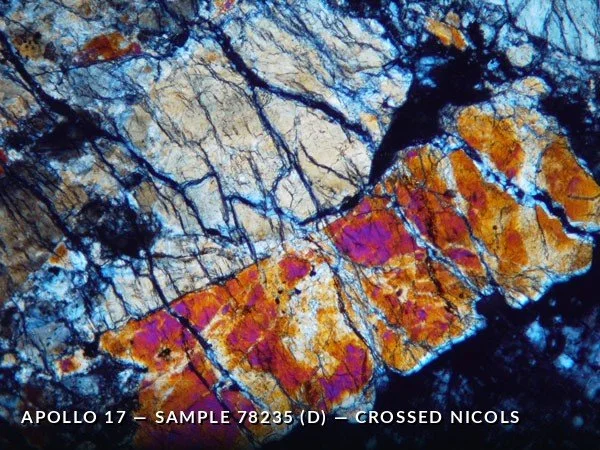
Between 1969 and 1972, six Apollo missions brought back 382 kilograms of lunar material. A small part of it was cut into thin sections — slices ground to thirty microns, thin enough that light passes through the minerals and reveals their optical properties. The images here were taken through a petrographic microscope, in plane-polarised light and between crossed polarisers.
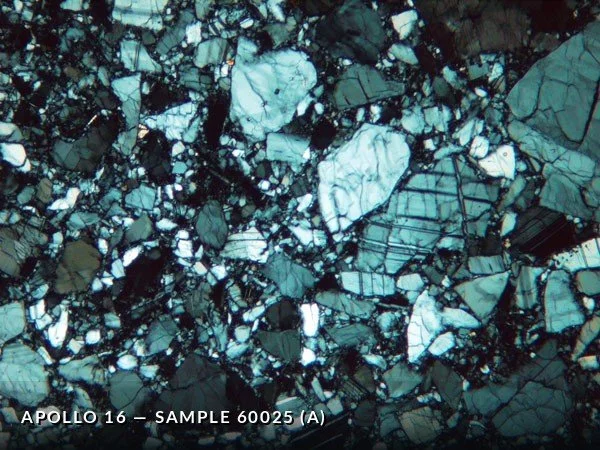
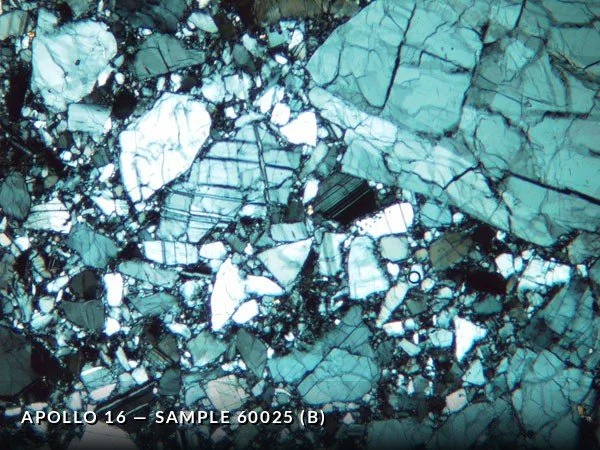
The collection spans five missions. Apollo 12 and 17 sampled the dark volcanic plains — the maria, flooded with basalt lava between about 3.9 and 3.1 billion years ago. Apollo 16 landed in the bright highlands and returned anorthosite, rock formed from crystals that floated to the top of a molten lunar magma ocean while the Moon was still forming. Apollo 14 and 15 sampled material reworked by impact.
What makes these worth looking at closely is that the Moon has no atmosphere, no water and no plate tectonics. Nothing has weathered them, buried them, or recycled them. Textures that would have been erased on Earth within a few million years survive here essentially as they formed — which is why lunar samples record the first billion years of solar system history far better than any rock on Earth.
Dr. Merguerian's lecture Exploration and Geology of the Earth's Moon covers this material in full — the Apollo missions, the Artemis programme, and what lunar rocks tell us about the earliest Earth. [Watch the lecture →]
Reading the captions. Each image is labelled with its mission and NASA sample number, and whether it was photographed in plane light or under crossed nicols. Plane light shows colour, relief and cleavage; crossed nicols shows the interference colours that identify minerals and reveal twinning and strain.